
What Are the Signs You Need Gutter Repair in Utah?
In Utah, gutter systems take more abuse than most homeowners realize. Freeze-thaw cycles. Spring runoff. Snow load. Wind-driven debris. Rapid temperature swings. All of these stress your gutters season after season.
Many homeowners assume gutters either work or they do not. In reality, most failing systems show warning signs long before full replacement is necessary. Recognizing those signs early can prevent fascia damage, foundation pooling, and larger repair costs later.
Old or Outdated Gutter Systems
Age alone does not always require replacement. However, older systems often include outdated installation methods that do not meet modern standards. Common red flags include:
- Spike and ferrule fastening systems pulling loose from fascia
- Gutters installed before updated building code requirements
- Visible separation between sections
- Repeated patch repairs over time
Spike and ferrule systems in particular tend to loosen as wood expands and contracts through seasonal cycles. Once those fasteners begin backing out, sagging and improper pitch follow. If your home still has this style of fastening, it is worth having it evaluated before more significant issues develop.
Pooling Water in Corners or at Section Ends
One of the clearest signs of improper pitch is standing water inside the gutter channel. After a rainstorm, you should not see water sitting in corners, puddling near end caps, debris collecting in low spots, or dripping from seams hours after rainfall stops.
Improper slope can occur due to original installation errors, hanger spacing that is too wide, or snow and ice weight altering pitch over time. Even small slope inconsistencies can lead to long-term seam stress and corrosion. Water is designed to move. If it sits, something is wrong.
Leaking Seams, Especially at Corners
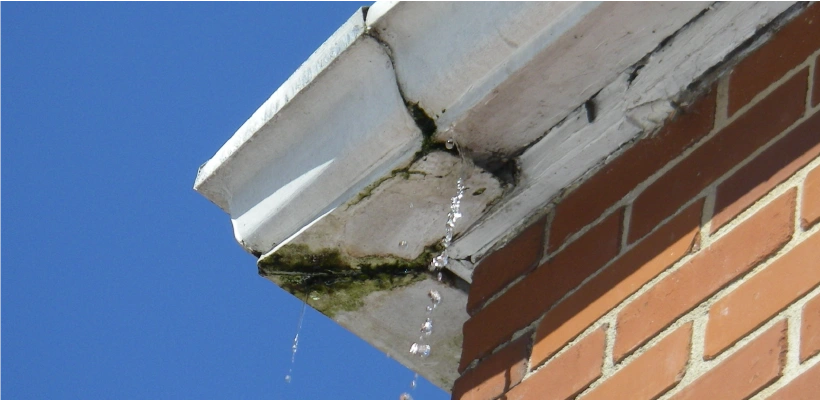
Corners are high-stress areas in any gutter system. They handle directional water changes and concentrated flow. Signs of seam failure include water dripping from miter joints, staining beneath corner connections, visible cracking in sealant, and rust forming at seam lines.
In Utah's freeze-thaw environment, small seam cracks can expand quickly. Moisture enters the joint, freezes, expands, and weakens the bond. Seam leaks are often repairable when caught early. Left unaddressed, they can require larger sectional replacement.
Improper Installation Technique
Not all gutter systems are installed with the same attention to detail. We regularly see issues such as hangers spaced too far apart, incorrect slope calculation, downspouts placed without proper drainage planning, gutters tucked improperly under drip edge, and inconsistent fastening patterns.
These issues may not be obvious from the ground. However, they often reveal themselves through overflow during moderate rain or visible sagging along the roofline. A properly installed system should appear with a slight slope towards downspouts, evenly supported, and securely fastened along the fascia.
Frequent Clogging from Leaves, Sticks, and Dirt
Debris buildup is one of the most common homeowner complaints. Clogging may indicate lack of gutter guard protection, poor guard design trapping debris, insufficient slope preventing debris movement, or downspout blockages.
In many Utah neighborhoods, especially those with mature landscaping, wind-driven debris accumulates quickly. If you find yourself cleaning gutters multiple times per season, it may be time to evaluate whether a more durable micro-mesh guard system is appropriate. Read our guide on gutter guards in Utah.
Broken or Detached Sections
Physical damage is sometimes obvious. Examples include detached downspouts, cracked end caps, bent or crushed sections, and gutters pulling away from fascia boards. Snow sliding from rooflines, ladder impact, or long-term fastener failure can all contribute to physical breakage.
Broken components often create chain reactions. A detached downspout can lead to foundation pooling. A separated section can stress adjacent joints. Addressing broken pieces quickly prevents broader structural concerns.
Water Pooling Near the Foundation
Sometimes the gutter itself appears intact, but water collects near the base of the home. This may indicate improper downspout placement, insufficient extension away from foundation, blocked underground drainage, or overflow from clogged sections.
Water pooling near foundation walls should never be ignored. Over time, this can contribute to soil erosion, basement moisture, or settling concerns. A gutter repair assessment often includes evaluating how water is directed once it leaves the roofline.
Ice Damage and Seasonal Stress
In Utah winters, ice expansion can stress both seams and fasteners. Watch for gutters separating after heavy snow, visible bending along the roofline, cracking sounds during freeze-thaw cycles, and ice buildup causing pulling at hanger points. Even if gutters appear intact during warmer months, winter stress may weaken connections. Proactive inspection before winter can prevent larger mid-season repairs.
Repair or Replacement?
Not every issue requires full replacement. Many systems can be corrected with hanger reinforcement, seam resealing, sectional replacement, pitch adjustment, downspout reconfiguration, or guard system upgrades. However, if multiple structural issues are present, replacement will always provide a more stable long-term solution.
If you are noticing any of these signs in Salt Lake County or surrounding areas, a professional inspection can clarify what the appropriate next step actually is. Early identification of issues reduces long-term expense and protects your home's exterior envelope. Schedule a free evaluation today.
Ready for a Free, In-Person Evaluation?
We come to you. No guessing over the phone. Serving all of Utah.