
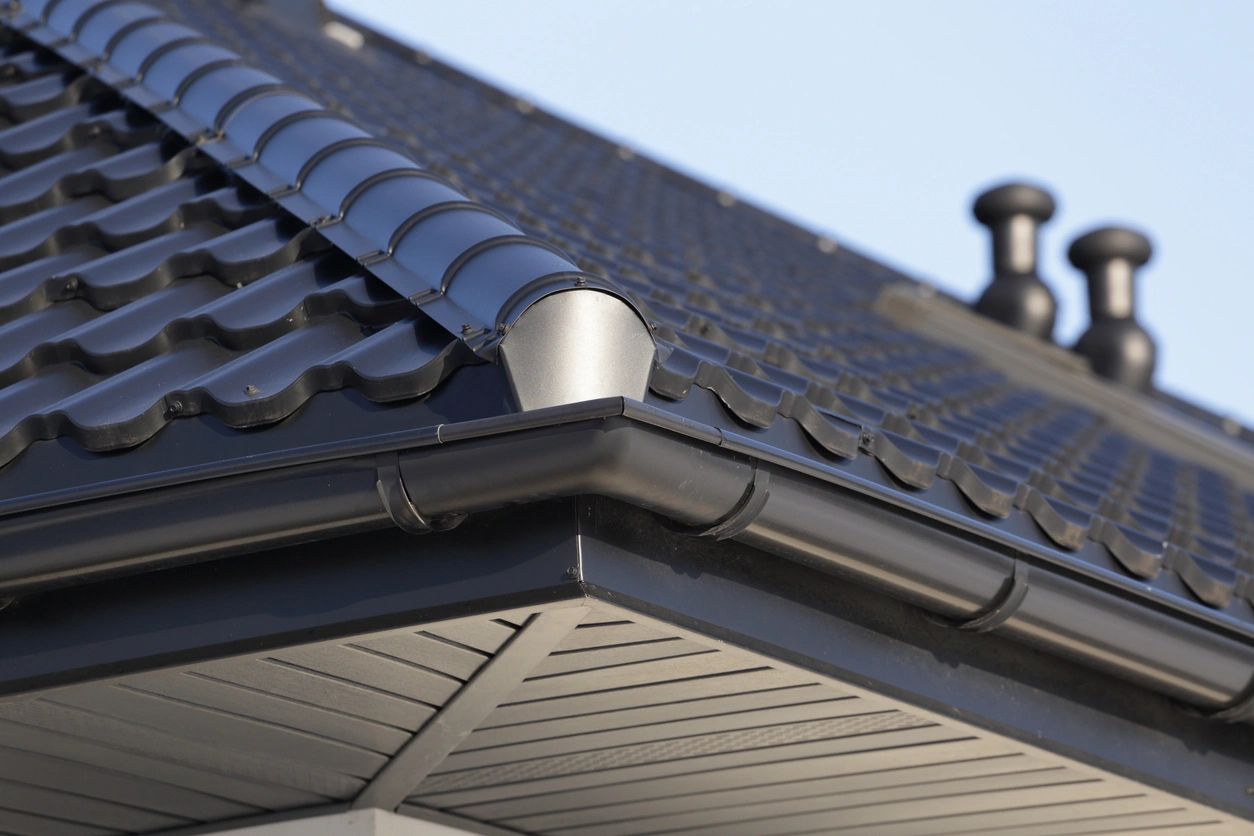
How Utah's Temperature Swings Quietly Destroy Gutters
And What Actually Holds Up
If you've lived in Utah for more than a year, you've heard the phrase:
"Drive 15 minutes or 15 miles, and the weather is completely different."
It's true.
Morning frost in Draper. Afternoon sun in Salt Lake City. Snow lingering in Alpine while West Jordan is dry. A 30 degree temperature swing in a single day is not unusual.
That constant fluctuation is one of the biggest hidden stressors on gutter systems.
Not just snow. Not just rain.
Temperature change.
And if a gutter system is not installed and sealed correctly, those shifts quietly weaken it over time.
Why Temperature Fluctuation Matters More Than Most Homeowners Realize
Metal expands when it heats up. Metal contracts when it cools down.
In a stable climate, that movement is predictable and moderate.
In Utah, movement is constant.
- Freezing mornings
- Warm afternoons
- Sudden spring cold fronts
- Rapid elevation shifts between neighborhoods
- Freeze thaw cycles during shoulder seasons
That expansion and contraction happens daily.
Over time, it stresses seams, corner miters, endcaps, fastener points, and gutter guard systems.
Most visible gutter failures start as microscopic movement at joints. You may not see the damage at first. But the system feels it.
The Most Common Failure Point: Seams and Corners
Corners and endcaps are high stress areas in any gutter system.
When temperatures swing dramatically, metal contracts overnight, expands mid day, pulls against sealant, and pushes against fastening points.
If corners are sealed with standard outdoor caulk or roofing tar, those materials often become brittle over time. They dry out. They crack. They separate under stress.
Once that happens, small leaks form. Those leaks worsen with each temperature cycle.
→ Signs You Need Gutter Repair in Utah
Why We Use Silicone Instead of Caulk or Tar
Sealant matters.
Many installers use standard exterior caulk, roofing tar, or general purpose sealants. These materials may work temporarily. But under constant expansion and contraction, they can harden and lose elasticity.
We intentionally use high grade silicone when sealing corner miters, endcaps, and seam joints.
Silicone maintains flexibility over time. It stretches and compresses with the metal rather than cracking under movement.
In a state where you can experience freezing mornings and 60 degree afternoons within hours, flexibility is critical.
Temperature resilience is not just about the gutter material. It is about every component of the system.
That detail alone often determines whether a corner lasts five years or fifteen.
Fasteners and Structural Stress
Expansion and contraction do not just affect seams. They also stress fastening systems.
Older spike and ferrule systems are especially vulnerable in fluctuating climates. As wood fascia expands and contracts, fasteners loosen.
When that happens, you begin to see slight sagging, uneven pitch, water pooling at corners, and separation along the roofline.
If slope changes even slightly, standing water increases freeze risk.
Material Choice and Temperature Stability
Different materials respond differently to temperature shifts.
Vinyl expands and contracts more dramatically than metal. In Utah's climate, this often leads to cracking at joints, warping under sunlight, and brittle failure during cold snaps.
Aluminum handles temperature swings more consistently and resists corrosion.
Copper and specialty metals also tolerate expansion cycles well, though they are typically selected for architectural reasons.
→ What Materials Are Best for Durable Rain Gutters in Utah
Material choice helps. But installation quality still determines performance.
Gutter Guards and Thermal Movement
Temperature shifts also affect gutter guard systems.
Lower quality plastic or thin metal guards can warp in summer heat, separate during freeze cycles, and pull away from attachment points.
When that happens, debris enters the gutter channel and traps moisture. Trapped moisture increases freeze expansion risk during colder nights.
→ Are Gutter Guards Worth It in Utah
Stainless steel micro mesh systems perform better in fluctuating climates because they resist corrosion and maintain structural integrity.
Elevation Differences Matter
One of the unique challenges in Salt Lake County is microclimate variation.
Homes in Alpine and Highland may hold snow longer due to elevation. Park City experiences different freeze timing than West Jordan. You can drive 15 minutes or 15 miles and see entirely different roof conditions.
That means ice may linger longer in certain neighborhoods, expansion cycles may occur at different times, and sun exposure varies dramatically.
A gutter system installed without considering local exposure can experience uneven stress. Proper slope and fastening must account for these variations.
When Temperature Damage Becomes Expensive
Temperature related stress often begins invisibly.
Then homeowners notice persistent dripping at corners, staining beneath seams, gutters pulling slightly from fascia, and water pooling near the foundation.
If left unaddressed, those minor leaks can become fascia rot, foundation pooling, landscape erosion, and sectional replacement needs.
Addressing sealant failure early is far less expensive than replacing long sections later.
Acting Before Damage Escalates
Many homeowners delay addressing minor leaks because the system still "mostly works."
But temperature fluctuation damage rarely stabilizes on its own. Each season compounds stress.
This is where financing can help homeowners act proactively rather than reactively.
→ 48 Month 0% Financing for Gutter Installation
When spread over time, correcting a failing system before additional damage develops becomes easier to justify.
What Actually Holds Up in Utah
Based on years of installations across Salt Lake City, Draper, Alpine, Highland, West Jordan, and surrounding areas, durable systems share a few characteristics:
- Aluminum or custom metal construction
- Reinforced hanger spacing
- Proper pitch calibration
- Silicone sealed corners and endcaps
- Climate appropriate guard systems
- Structured installation standards
Utah's climate is not forgiving. But properly installed systems designed for expansion and contraction cycles perform reliably year after year.
The Bottom Line
Utah does not offer stable, predictable weather patterns. Temperature swings are constant. Expansion and contraction are unavoidable.
The difference between a system that lasts and one that fails often comes down to small installation details: sealant choice, fastener spacing, slope accuracy, material stability.
If you are seeing early signs of seam separation, minor leaks, or sagging sections, a structured evaluation can determine whether reinforcement or replacement makes sense before larger damage occurs.
Temperature fluctuation is not going away. Designing for it is the only solution.
Ready for a Free, In-Person Evaluation?
We come to you. No guessing over the phone. Serving all of Utah.